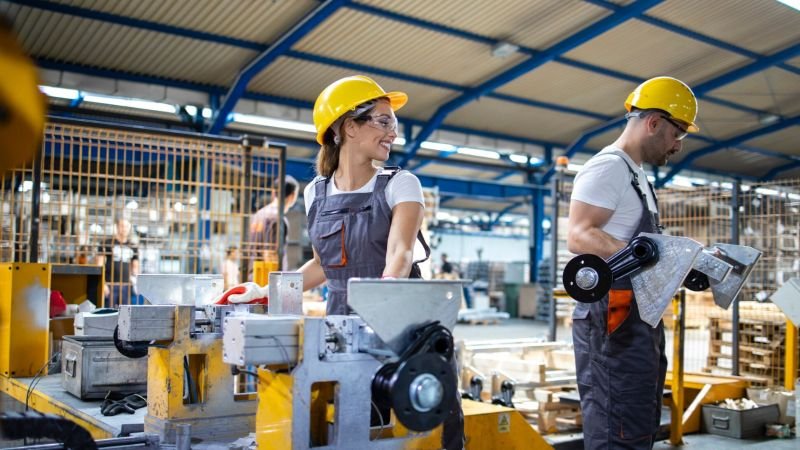
In the dynamic landscape of industrial manufacturing, uninterrupted operation is the bedrock of productivity and profitability. Our facilities rely heavily on complex machinery, where every component plays a crucial role. When a critical piece of equipment, such as an industrial gearbox, unexpectedly fails, the consequences can be severe—leading to costly downtime, production delays, and significant financial strain.
Understanding how to prevent these failures, and more importantly, how to react decisively when they occur, is key to maintaining operational continuity. This article will delve into effective strategies for ensuring the reliability of your industrial manufacturing equipment, from proactive maintenance to immediate response protocols. When faced with a critical breakdown, specialized industrial gearbox repair services become indispensable for swift restoration. We will explore the critical considerations for emergency restorations and how they contribute to long-term asset longevity.
Maintaining optimal performance and preventing catastrophic failures in industrial manufacturing equipment, especially critical components like gearboxes, hinges on a robust and multifaceted reliability strategy. While emergency repairs address immediate crises, a proactive approach significantly reduces their frequency and impact. Our focus in October 2026 remains firmly on leveraging advanced techniques to predict and prevent issues before they escalate.
One of the cornerstones of this strategy is predictive maintenance (PdM). Unlike traditional time-based maintenance, PdM utilizes real-time data and analytical tools to forecast when equipment failure might occur. This allows for scheduled maintenance interventions precisely when they are needed, minimizing unnecessary downtime and maximizing asset utilization. For gearboxes, this often involves a combination of sophisticated monitoring techniques.
Vibration analysis is a powerful PdM tool for gearboxes. By monitoring the vibration patterns emitted by a gearbox, technicians can detect early signs of wear, misalignment, bearing damage, or gear tooth defects. Changes in vibration signatures—such as increased amplitude or specific frequency shifts—indicate developing problems long before they become audible or visible, providing ample time to plan corrective action.
Similarly, thermal imaging, or thermography, plays a crucial role. Overheating in a gearbox can signal excessive friction, lubrication issues, or impending bearing failure. Infrared cameras can quickly identify hot spots that are invisible to the naked eye, allowing for targeted inspections and interventions. This non-invasive method is particularly valuable for inaccessible or hazardous equipment.
Finally, comprehensive condition monitoring encompasses these techniques and more, integrating data from various sensors and diagnostic tools. This might include acoustic monitoring, motor current analysis, and even visual inspections. The goal is to establish a baseline of normal operation and then continuously track deviations, providing a holistic view of the gearbox’s health. By employing these core strategies, we can transition from a reactive “fix-it-when-it-breaks” mentality to a proactive “predict-and-prevent” approach, safeguarding our industrial assets and ensuring continuous production.
Proactive Care for Critical Industrial Manufacturing and Equipment Components
Beyond predictive monitoring, diligent proactive care of critical industrial manufacturing equipment components, particularly gearboxes, is paramount to extending their lifespan and preventing unexpected breakdowns. These routine practices form the bedrock of a reliable operation.
Lubrication management is arguably the most critical aspect of gearbox maintenance. Proper lubrication reduces friction, dissipates heat, and prevents wear between moving parts. This involves not only using the correct type and grade of lubricant specified by the manufacturer but also adhering to strict schedules for oil changes and top-offs. Contaminated or degraded lubricant is a leading cause of gearbox failure, making its careful management indispensable.
Closely linked to lubrication is oil analysis. Regular sampling and laboratory analysis of gearbox oil can reveal a wealth of information about the internal condition of the unit. This includes detecting wear metals (indicating component wear), contaminants (such as water, dirt, or fuel), and the degradation of the oil itself. Early detection of these issues through oil analysis allows for timely intervention, such as filtration, oil changes, or even minor repairs, before significant damage occurs.
Seal integrity is another vital,, component of proactive care. Gearbox seals prevent lubricant leakage and, critically, protect the internal components from external contaminants like dust, moisture, and abrasive particles. Damaged or worn seals can lead to rapid oil degradation and accelerated wear. Regular inspection and timely replacement of seals are essential to maintain a clean internal environment and prevent costly repairs.
Finally, shaft alignment is fundamental to the smooth and efficient operation of any rotating machinery, including gearboxes. Misalignment between the gearbox input/output shafts and the connected motor or driven equipment can induce excessive vibration, stress on bearings and gears, and lead to premature failure. Precision laser alignment tools are used to ensure that shafts are perfectly aligned, minimizing mechanical stress and optimizing power transmission.
Investing in these proactive measures significantly reduces the likelihood of sudden, costly breakdowns. While the upfront costs of preventative maintenance (PM) might seem notable, they are dwarfed by the expenses associated with reactive repairs and lost production. The following table illustrates the stark contrast between these two approaches:
Feature Preventative Maintenance (PM) Reactive Breakdown Repair Cost Planned, lower overall; parts and labor at standard rates Unplanned, significantly higher; rush fees, premium parts Downtime Scheduled, minimal, often during non-production hours Unscheduled, extended, impacts production directly Predictability High; issues addressed before failure Low; sudden, unexpected failures Equipment Health Maintained at optimal levels; extended asset life Degrades rapidly; potential for cascading failures, reduced life Immediate Response Protocols for Gearbox Failures
Despite the most rigorous proactive maintenance strategies, industrial gearbox failures can still occur. When they do, a swift and well-defined immediate response protocol is crucial to mitigate damage, ensure safety, and minimize downtime. Every second counts in preventing a minor issue from becoming a catastrophic event.
The very first step in any gearbox failure scenario is an emergency shutdown. This involves immediately disengaging power to the affected machinery and, if possible, locking out the power source to prevent accidental restart. This protects personnel from moving parts and prevents further damage to the gearbox and connected equipment. Clear, accessible emergency stop buttons and well-trained operators are vital for this initial response.
Following the shutdown, containment procedures should be enacted. This primarily involves addressing any leaks of lubricant or hydraulic fluid to prevent environmental contamination, slip hazards, and further loss of critical fluids. Spill kits should be readily available and personnel trained in their use. Containing the immediate area also involves cordoning off the machinery to prevent unauthorized access and ensure a safe working environment for diagnostic and repair teams.
A preliminary damage assessment should then be conducted by trained personnel. This initial assessment aims to identify the most obvious signs of failure, such as visible cracks, severe leaks, unusual wear patterns, or dislodged components. While not a definitive diagnosis, it helps inform the next steps and provides crucial information for the repair specialists. Careful documentation of observations, including photos and videos, is highly recommended.
Finally, comprehensive failure logging is essential. Every detail of the incident—the exact time of failure, symptoms observed, environmental conditions, previous maintenance records, and actions taken during the emergency shutdown—must be meticulously recorded. This data is invaluable for root cause analysis, which is critical for preventing recurrence. Accurate logging also supports warranty claims and provides a historical record for future maintenance planning. By following these immediate response protocols, facility managers can effectively control the situation, protect assets, and lay the groundwork for efficient restoration.
Managing Emergency Restorations and Industrial Gearbox Failures
When an industrial gearbox suffers an unexpected breakdown, the impact on production can be severe. This is where specialized emergency restoration services become invaluable, offering a lifeline to operations facing critical downtime. The primary goal of these services is to get the machinery back online as quickly and reliably as possible.
The hallmark of an effective emergency gearbox repair service is rapid response. This means having the capability to dispatch technicians and begin the diagnostic process within hours of a failure notification, regardless of time or day. Many leading repair companies offer 24/7 emergency hotlines and mobile service teams specifically equipped for urgent on-site assessments. This immediate engagement is critical for quickly understanding the scope of the problem.
Following the initial assessment, the emphasis shifts to expedited turnaround. Unlike standard repairs that might take weeks, emergency services prioritize speed without compromising quality. This often involves dedicated repair bays, specialized tooling, and a highly skilled workforce focused solely on urgent projects. Statistics show that some emergency gearbox repair services can provide 24- to 48-hour rush repair turnaround for qualifying jobs nationwide, while others can turn around gearbox or pump repairs in as little as 24 hours. Even for complex issues, urgent cases are expedited to provide speedy, reliable service on gearbox projects, significantly reducing the financial impact of prolonged downtime.
A common challenge in emergency repairs, especially for older or specialized equipment, is dealing with obsolete or hard-to-find parts. Leading repair companies overcome this through several advanced capabilities. Reverse engineering allows them to meticulously analyze a worn or broken component, measure its dimensions, and understand its material composition and manufacturing process. This enables them to recreate the part precisely, even if original blueprints or manufacturers no longer exist.
Complementing reverse engineering is custom gear cutting. Modern CNC (Computer Numerical Control) machining centers can precisely cut new gears to exact specifications, ensuring they perfectly integrate with the existing gearbox components. This capability is vital when off-the-shelf replacements are unavailable, guaranteeing that the repair is not delayed by supply chain issues. By combining rapid response with advanced manufacturing techniques, emergency repair specialists ensure that even the most challenging gearbox failures can be addressed efficiently and effectively.
Rebuilding vs. Replacing Industrial Manufacturing and Equipment
When faced with a critically failed industrial gearbox, facility managers are often confronted with a pivotal decision: repair the existing unit or replace it entirely. This choice has significant implications for both immediate operational continuity and long-term financial health.
A key consideration is capital expenditure. Replacing a large industrial gearbox can represent a substantial capital investment, often requiring significant budget allocation and approval processes. Repairing, on the other hand, is typically classified as an operational expense, which can be more readily approved and budgeted for, especially in an emergency.
Perhaps even more critical in an emergency scenario is lead time reduction. New gearboxes, particularly custom or large-scale units, can have lead times stretching from several weeks to many months, depending on manufacturing schedules and supply chain dynamics. This extended waiting period translates directly into prolonged and costly downtime. Emergency repair services, by contrast, are designed for speed. As noted earlier, rush repairs can be completed in as little as 24-48 hours for qualifying jobs, offering a dramatically faster path back to production.
The financial benefits of repair are also compelling. Research indicates that repairing a gearbox can save 40% to 60% compared to buying new. For large-scale units, some repair specialists guarantee savings of up to 50% versus replacement cost. These savings stem from leveraging existing gearbox housings and other salvageable components, focusing only on replacing or refurbishing the damaged internal parts. This makes emergency repair a highly attractive option for maintaining operational budgets while restoring critical functionality.
The decision to repair or replace is complex, weighing immediate costs against long-term reliability and availability. The following table provides a concise comparison to aid in this critical decision-making process:
Feature Emergency Gearbox Repair Full Gearbox Replacement Upfront Cost Significantly lower (40-60% savings vs. new) High capital expenditure Lead Time Extremely short (24-48 hours for rush, 7-10 days standard) Long (weeks to months, depending on unit) Downtime Impact Minimal due to rapid turnaround Potentially extensive, significant production loss Warranty Typically offered on repaired components and labor Full manufacturer warranty on new unit Asset Life Restored to near-new performance, extended operational life New unit, full expected operational life Quality Assurance and OEM Performance Standards
For emergency gearbox repairs to be a viable and sustainable solution, they must not only be fast but also meet rigorous quality assurance standards, aiming for performance equivalent to or exceeding Original Equipment Manufacturer (OEM) specifications. Restoring a critical asset means ensuring its reliability and longevity, not just a temporary fix.
A cornerstone of quality assurance in gearbox repair is comprehensive load testing. After a rebuild or repair, the gearbox is subjected to operational conditions, often under varying loads and speeds, to verify its performance, efficiency, and structural integrity. This testing identifies any remaining issues, such as excessive vibration, noise, or heat generation, before the unit is reinstalled in the production environment. It ensures that the repaired gearbox can withstand the demands of its intended application.
Gear tooth profiling is another critical aspect. The precise geometry of gear teeth is fundamental to efficient power transmission and long gear life. During repair, worn or damaged gears are often replaced or re-machined. Advanced gear cutting techniques and metrology are used to ensure that the new or refurbished gears conform to exact profiles, minimizing friction, maximizing contact area, and preventing premature wear. This meticulous attention to detail ensures smooth operation and optimal load distribution.
Dynamic balancing is essential for high-speed rotating components within the gearbox, such as shafts and impellers. Imbalance can lead to excessive vibration, stress on bearings, and ultimately, premature failure. Dynamic balancing corrects these imbalances, ensuring smooth rotation and extending the lifespan of the repaired unit. This is particularly important for gearboxes operating in demanding industrial environments.
Furthermore, reputable emergency repair companies stand behind their work with performance warranties. These warranties typically cover the repaired components and the labor involved, providing facility managers with peace of mind. The duration and scope of these guarantees vary but generally reflect the confidence the repair provider has in their quality and craftsmanship. By adhering to these stringent quality assurance measures and offering robust warranties, emergency gearbox repair services ensure that restored units deliver OEM-level performance and reliability, safeguarding future operations.
High-Stakes Sectors Reliant on Heavy Machinery Maintenance
The need for highly responsive emergency gearbox repair services is particularly acute in industries where continuous operation is not just desirable but absolutely critical. In these high-stakes sectors, an unexpected gearbox failure can halt entire production lines, leading to monumental financial losses, safety hazards, and significant environmental impact.
Power generation facilities, including thermal, hydroelectric, and wind farms, are prime examples. Gearboxes in wind turbines, for instance, operate under immense stress, converting slow rotor speeds into high generator speeds. A failure here means immediate loss of power output, impacting energy supply and revenue. Similarly, gearboxes in coal pulverizers or cooling tower fans in conventional power plants are vital links in the energy production chain.
Mining operations depend heavily on robust gearboxes for conveyors, crushers, excavators, and hoists. These machines operate in harsh, abrasive environments, often under extreme loads. A breakdown in a primary crusher’s gearbox can bring an entire mining process to a standstill, impacting ore extraction and processing, with costs accumulating rapidly.
The pulp and paper industry is another sector where continuous processing is non-negotiable. Gearboxes drive massive rollers, refiners, and dryers that are integral to paper production. The sheer scale and continuous nature of these operations mean that any interruption, even for a few hours, results in significant waste of raw materials and lost product volume.
In steel production, gearboxes are found in rolling mills, blast furnace charging systems, and cranes. These applications involve extreme temperatures, heavy loads, and abrasive conditions. The failure of a gearbox in a hot rolling mill can lead to massive production losses and safety concerns, given the molten metal and heavy machinery involved.
These industries share common characteristics: they operate 24/7, involve heavy, capital-intensive machinery, and have tightly integrated processes where a single component failure can cascade through the entire system. For them, the ability to access rapid, high-quality emergency gearbox repair is not merely a convenience but an essential component of their operational resilience and risk management strategy.
Frequently Asked Questions About Industrial Machinery Care
Facility managers and maintenance professionals often have critical questions when it comes to managing industrial machinery, especially concerning emergency situations. Here, we address some of the most common inquiries.
How quickly can emergency industrial gearbox repairs be completed?
The speed of emergency industrial gearbox repairs is a primary concern for any facility experiencing unexpected downtime. While standard repairs might take 7-10 business days, emergency services are specifically designed for rush turnaround. Many specialized repair companies boast the capability to provide 24- to 48-hour rush repair turnaround for qualifying jobs nationwide. In some cases, for less complex issues or readily available parts, they can turn around gearbox or pump repairs in as little as 24 hours. The actual timeline depends on the extent of the damage, the availability of specific parts, and the complexity of the gearbox, but the industry standard for emergency services aims to minimize downtime aggressively.
How do repair technicians address obsolete or discontinued machinery parts?
Addressing obsolete or discontinued machinery parts is a common challenge in maintaining older industrial equipment. Modern emergency repair technicians employ several advanced strategies to overcome this. The most prevalent method is reverse engineering, where the damaged or worn part is meticulously measured, analyzed for material composition, and digitally modeled. Based on this, new parts can be manufactured. This is often coupled with CNC machining, which allows for the precise fabrication of custom components, including gears, shafts, and housings, to exact OEM specifications. This ensures that the replacement part perfectly integrates with the existing gearbox, restoring full functionality even when original parts are no longer available from the manufacturer.
What immediate steps should facility managers take when a critical breakdown occurs?
When a critical breakdown occurs, such as a gearbox failure, facility managers must act decisively to minimize damage and prepare for repair. The very first step is immediate machinery isolation. This involves safely shutting down the equipment, disconnecting its power source, and implementing lockout/tagout procedures to prevent accidental restart. Following this, it’s crucial to begin root-cause documentation. This includes recording the exact time of failure, observed symptoms (e.g., unusual noises, vibrations, leaks), any environmental factors, and previous maintenance history. Photos and videos of the damage can be invaluable. Finally, dispatching a professional diagnostic team from a specialized emergency repair service should be the next priority. Providing them with comprehensive documentation will expedite their assessment and the subsequent repair process.
Conclusion
In the demanding world of industrial manufacturing, the reliability of heavy machinery is non-negotiable. While proactive maintenance strategies are essential for preventing failures, the reality is that emergency situations will occasionally arise. When an industrial gearbox fails, the ability to respond swiftly and effectively through specialized emergency repair services is paramount to maintaining operational continuity.
By understanding the signs of impending failure, implementing robust immediate response protocols, and leveraging the expertise of repair specialists, facility managers can significantly mitigate the impact of unexpected breakdowns. The decision to repair, rather than replace, often presents substantial cost benefits and dramatically reduced lead times, ensuring that critical assets are restored to OEM-level performance with minimal disruption.
Investing in both proactive care and a reliable emergency repair partnership contributes directly to enhanced asset longevity and a lower total cost of ownership over the lifespan of industrial equipment. It’s about ensuring that production lines keep moving, safeguarding profitability, and building a resilient manufacturing operation for the future. See more.