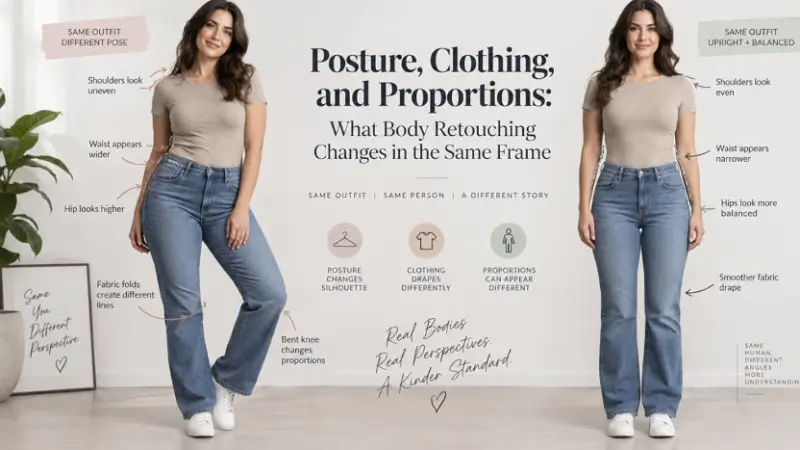
A full-body photo can suggest a different figure simply because of the way someone is standing. A shifted hip, bent knee, raised shoulder, or slightly twisted torso changes where fabric gathers, how the waistline appears, and which parts of the body seem longer or shorter.
Before using a body retouching app, it helps to read those posture clues first. Some “shape” issues are really pose issues, and correcting the wrong one can make the result less convincing rather than more polished.
Start by reading the pose
Weight distribution changes the silhouette long before any retouching begins. When most of the weight sits on one leg, the pelvis tilts, one knee relaxes, and the shoulders may counterbalance in the opposite direction. A turned torso can narrow one side of the waist while making the other appear fuller.
Those differences are not necessarily flaws. They are evidence of how the body is positioned in the frame. Before changing proportions, compare the left and right sides and ask what the pose itself is already doing.
Clothing can reveal where the body is carrying tension
Fabric acts like a record of movement. Folds gather where joints bend, seams pull where the torso twists, and fitted clothing shows where weight is pressing or relaxing. A diagonal crease across a shirt may say more about posture than the outline of the waist does.
That makes clothing a useful diagnostic clue. Folds and seams can show where a shoulder is raised, a hip turns, or one leg carries the weight. Reading those clues first helps separate a posture effect from a proportion you actually want to change.
Decide what kind of correction the image actually needs
Once the pose is understood, the edit can be more specific. A slouched upper body may call for a small posture adjustment. A hip pushed toward the lens may need a perspective-aware correction. A deliberate change to waist, shoulders, or leg length is a separate creative decision.
A useful order is to identify the cause before choosing the correction:
- posture issue — adjust the stance or alignment;
- perspective issue — review camera angle and depth;
- clothing tension — preserve the direction of folds and seams;
- intentional reshaping — change proportions only after the first three are understood.
This prevents several different causes from being treated as one generic “body shape” problem.
Proportion changes should support the pose, not erase it
The goal is not to make every shoulder, hip, or leg perfectly symmetrical. Natural poses often depend on asymmetry: one knee bends, one side compresses, one shoulder sits slightly higher.
A good edit respects that structure. It can refine the silhouette while leaving enough of the original weight shift and movement for the stance to remain believable.
Read the body before you reshape it
Posture, fabric, and proportions are easier to edit in the right order. The pose shows how the body is standing, clothing reveals tension and movement, and reshaping comes last.
That sequence keeps the edit focused on the actual issue instead of treating every asymmetry as a flaw. See more