Introduction
Artificial intelligence has moved from being an optional feature inside software to becoming a core operational engine in many SaaS products. Subscription businesses that once depended on predictable monthly or yearly pricing structures are now facing a new economic reality driven by computational cost, usage variability, and performance based delivery. The presence of AI inside SaaS platforms has changed how value is calculated, how costs are managed, and how revenue is forecasted.
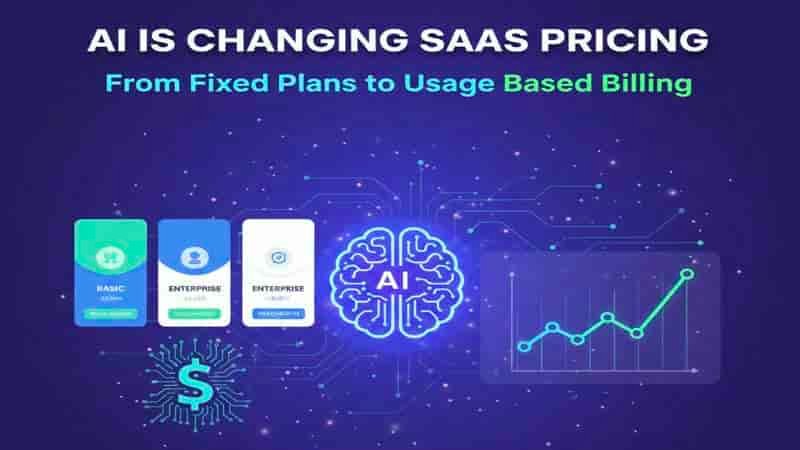
Earlier SaaS pricing relied on access based logic. You paid for the right to use the software. Now AI powered systems charge based on processing activity, output volume, and infrastructure consumption. This shift has altered subscription logic in measurable and structural ways.
Traditional SaaS Pricing Models Before AI Integration
Fixed Tier Subscription Structure
Most SaaS companies historically followed a tiered pricing framework. Plans were divided into levels such as Basic, Pro, and Enterprise. Each tier included a predefined bundle of features, storage limits, and support levels. Customers upgraded when their needs exceeded the boundaries of a lower plan.
This structure was predictable for revenue forecasting. It also simplified marketing communication because value differentiation was feature based rather than consumption based. However, the model assumed that usage patterns within each tier would remain relatively stable.
Seat Based Pricing Logic
Many collaboration tools priced subscriptions based on the number of active users. Organizations paid per seat. If a company added ten team members, the subscription cost increased proportionally.
This model worked effectively for tools such as customer relationship management systems, communication platforms, and project management software. The pricing logic was straightforward because cost scaled linearly with user count.
Feature Gating as an Upgrade Path
Feature gating created structured upgrade funnels. Advanced analytics, API access, automation tools, and integration capabilities were restricted to higher plans. Customers upgraded when operational complexity increased.
This approach depended on static product segmentation. Features were locked or unlocked depending on subscription level. The value proposition was feature access rather than computational activity.
Strategic Implications for SaaS Companies
These pricing principles also apply to platforms that blend engagement mechanics with intelligent automation. For example, a platform like Freegiftzone app & Freegiftzone website operates on user actions, reward allocation, and traffic quality control.
If AI systems are used to detect fraudulent participation, score user behavior, or dynamically adjust reward visibility, each automated decision consumes computational resources.
When computational cost scales with user volume, the platform must indirectly align monetization logic with AI usage intensity. In such cases, even a reward driven ecosystem begins to resemble AI SaaS economics, where infrastructure cost, behavior analytics, and automated decision engines influence revenue structure.
How AI Is Reshaping Pricing Architecture
Usage Based Billing Models
AI powered tools consume computing resources with every interaction. Each request processed by a language model, image generator, or recommendation engine uses measurable infrastructure capacity. Because infrastructure costs are directly tied to usage, many SaaS providers have shifted toward metered billing structures.
Usage based pricing can include charges per API call, per AI request, per generated output, or per unit of processed data. This creates a direct relationship between customer activity and operational cost.
Token Based Pricing Mechanisms
Large language model driven applications introduced token based billing. Tokens represent segments of processed text. The more tokens processed, the higher the infrastructure cost.
This model allows granular cost recovery. It aligns subscription fees with actual model usage rather than simple access rights. For companies integrating external AI APIs, token pricing also mirrors vendor cost structures.
Credit Systems and Hybrid Plans
Some SaaS platforms combine fixed subscriptions with credit allocation systems. Users pay a base monthly fee that includes a predefined number of AI credits. When credits are exhausted, additional credits can be purchased.
This hybrid model blends predictable recurring revenue with flexible usage scaling. It also protects companies from uncontrolled infrastructure expenses during periods of heavy activity.
Dynamic Pricing Optimization Using AI
Artificial intelligence is not only embedded in product features. It is also used to analyze pricing performance. Machine learning systems can evaluate churn probability, engagement metrics, feature utilization, and customer lifetime value.
Based on this data, SaaS companies experiment with adaptive discount structures, trial durations, and personalized upgrade prompts. Pricing experimentation has shifted from periodic manual adjustments to continuous algorithm driven refinement.
Changes in Subscription Logic and Revenue Forecasting
Transition from Access Based to Outcome Based Pricing
Traditional SaaS subscriptions focused on software access. AI driven platforms increasingly link pricing to measurable output. Examples include pricing based on generated marketing campaigns, automated support interactions handled, or code reviewed and optimized.
This transition connects revenue to delivered results rather than static feature bundles. It alters how customers perceive value and how companies structure contracts.
Hybrid Revenue Streams
Modern AI SaaS businesses frequently combine recurring subscription fees with variable usage charges. Base subscriptions provide platform access. Overage fees account for heavy AI consumption. Enterprise agreements may include negotiated usage thresholds.
Revenue forecasting now requires modeling both predictable recurring income and fluctuating consumption patterns. Financial planning has become more complex as variability increases.
Infrastructure Cost Sensitivity
AI workloads rely on cloud hosting, model inference engines, and storage systems. Sudden spikes in usage can generate significant operational cost increases. Without proper metering, flat pricing can create margin pressure.
As a result, subscription logic must incorporate safeguards such as rate limits, usage caps, or tiered overage fees.
Margin Management
Compute intensive AI models increase variable costs. Companies must design pricing structures that recover infrastructure expenses while maintaining competitive positioning. Underpricing AI capabilities can result in negative margins during high usage periods.
Competitive Differentiation
As AI features become standard across SaaS categories, pricing differentiation shifts toward efficiency, model quality, and cost transparency. Customers evaluate not only features but also cost predictability and billing clarity.
Customer Segmentation and Personalization
AI analytics enables detailed segmentation of customers based on usage behavior. High consumption users can be offered enterprise packages. Low engagement users can receive retention incentives.
Pricing personalization is increasingly data driven rather than assumption based.
Conclusion
Artificial intelligence has fundamentally altered SaaS pricing structures. Subscription logic is moving away from static tiered access toward dynamic usage alignment. Billing models now reflect computational cost, performance output, and behavioral data.
The integration of AI into SaaS platforms requires companies to rethink how revenue is generated, forecasted, and protected. Pricing strategy is no longer a secondary marketing decision. It has become an operational discipline tightly linked to infrastructure economics and data intelligence.